Brief introduction of electron beam evaporation
Electron beam evaporation is a kind of physical vapor deposition Different from the traditional evaporation method, electron beam evaporation can precisely bombard the target in the crucible with high-energy electrons by using the combination of electromagnetic fields to melt it and then deposit it on the substrate. Electron beam evaporation can produce films with high purity and precision.
Principle of evaporation plating
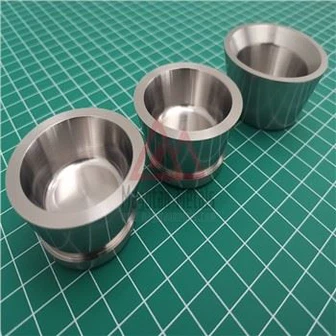
Electron beam evaporation is to accelerate electrons to bombard the coating material. The kinetic energy of electrons is converted into heat energy to heat the coating material for evaporation and film formation. Electron guns can be divided into direct beam, ring type and E type The characteristics of electron beam heating evaporation plating are that it can obtain extremely high energy density, up to 109w/cm2, heating temperature up to 3000~6000 ℃, and it can evaporate refractory metals or compounds; The evaporated material is placed in a water-cooled crucible to avoid the pollution of the crucible material and prepare a high-purity film; In addition, due to the small heating area of the evaporation, the heat radiation loss is reduced and the heat efficiency is high However, due to the complex structure and the possibility of decomposition of many compounds due to electron bombardment, it is not suitable for evaporation plating of most compounds.
effect
Electron beam evaporation is often used to prepare alloy or oxide films of Al, CO, Ni, Fe, SiO2, ZrO2, anti-corrosion and high-temperature oxide films
Comparison of advantages and disadvantages
The biggest advantages of electron beam evaporation and resistance evaporation are that they can provide higher heat for the substances to be evaporated, so the evaporation rate is also faster; Accurate electron beam positioning can avoid evaporation and pollution of crucible materials However, due to the continuous water cooling in the evaporation process, the utilization rate of energy is not high; Moreover, the secondary electrons possibly brought by high-energy electrons may ionize the residual gas molecules, and may also bring pollution In addition, most compound films will decompose when bombarded by high-energy electrons, which affects the composition and structure of the films.