Molybdenum Applications and Science
Molybdenum is a metallic element with the element symbol: Mo, English name: Molybdenum, atomic number 42, and is a metal of the VIB group. Molybdenum has a density of 10.2 g/cm³, a melting point of 2610°C and a boiling point of 5560°C. Molybdenum is a silvery-white metal, hard and tough, with a high melting point and relatively high thermal conductivity, and does not react with air by oxidation at room temperature. As a transition element, it is extremely susceptible to changing its oxidation state, and the color of the molybdenum ion changes as the oxidation state changes. Molybdenum is an essential trace element for humans, animals and plants, and plays an important role in the growth, development and genetics of humans as well as animals and plants. The average content of molybdenum in the earth's crust is 0.00011%, and global reserves of molybdenum resources are about 11 million tons, with proven reserves of about 19.4 million tons. Because of its high strength, high melting point, corrosion resistance and wear resistance research, molybdenum is widely used in steel, petroleum, chemicals, electrical and electronic technology, medicine and agriculture.3 Refractory metals: applications of molybdenum
Molybdenum is used predominantly in the steel industry, accounting for about 80 percent of total molybdenum consumption, followed by the chemical industry, which accounts for about 10 percent. In addition, molybdenum is also used in the fields of electrical and electronic technology, medicine and agriculture, accounting for around 10 percent of total consumption.
The largest consumption of molybdenum is in the steel sector, where it is mainly used for the production of alloy steels (about 43 percent of the total consumption of molybdenum in steel), stainless steels (about 23 percent), tool and high-speed steels (about 8 percent), cast iron and rolls (about 6 percent). Most of the molybdenum is briquetted as industrial molybdenum oxide and then used directly in steelmaking or cast iron, while a small percentage is first smelted into ferromolybdenum and then used in steelmaking. Molybdenum as an alloying element in steel has the following advantages: it increases the strength and toughness of steel; it improves the corrosion resistance of steel in acid and alkaline solutions and liquid metals; it increases the wear resistance of steel; and it improves the hardenability, weldability and heat resistance of steel. For example, stainless steel containing 4%-5% molybdenum is often used in places where erosion and corrosion are more severe, such as marine equipment and chemical equipment.
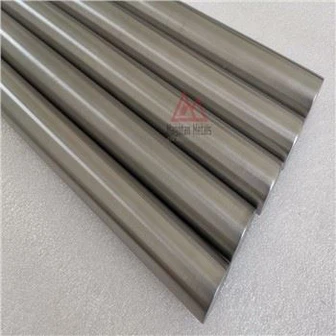
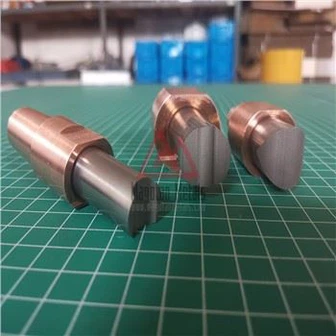
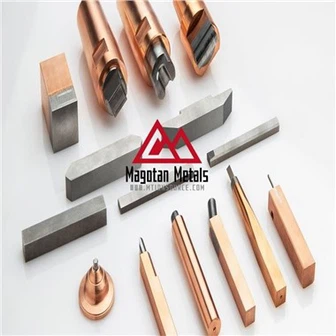
Molybdenum as a substrate to add other elements (such as titanium, zirconium, hafnium, tungsten and rare earth elements, etc.) to form a non-ferrous alloy, these alloying elements not only play a solid solution strengthening and maintain low temperature plasticity of molybdenum alloy, but also to form a stable, diffuse distribution of the carbide phase, improve the strength and recrystallization temperature of the alloy. Molybdenum-based alloys are used in high-heat generating components, extruded abrasives, glass melting furnace electrodes, spray coatings, metalworking tools, spacecraft components, etc. because of their good strength, mechanical stability, and high ductility.
The world's molybdenum resources are mainly concentrated in the eastern edge of the Pacific Basin, that is, from Alaska and British Columbia through the United States and Mexico to the Andes in Chile, the most famous is the Cordillera Mountains in the Americas, which has a large number of porphyry molybdenum and porphyry copper ore, such as the Climax and Hundson porphyry molybdenum mines in the United States, El Teniente, Chuquicamata, El Salvador, Tispi, etc. in Chile. Daca and other porphyry copper-molybdenum mines in Chile, Endako porphyry molybdenum mine and Hiramvalley porphyry copper-molybdenum mine in Canada, etc. China's molybdenum resource reserves are also quite abundant, with 56.5% of the country's total reserves in Henan, Shaanxi and Jilin provinces.
China is one of the richest countries in the world in terms of molybdenum resources, and according to the data released by the Ministry of Land and Resources, by the end of 2013, China's identified resource reserves of molybdenum were 26.202 million tons (metal content).In 2014, China added 1.066 million tons (metal content) of identified resource reserves of molybdenum, so by 2014, China's identified resource reserves of molybdenum reached 27.268 million tons (metal content). In addition, since 2011 to date, China has discovered three new 2 million ton molybdenum mines, including Shapinggou in Anhui Province, making China's resource base as the world's top molybdenum resource country more solid.