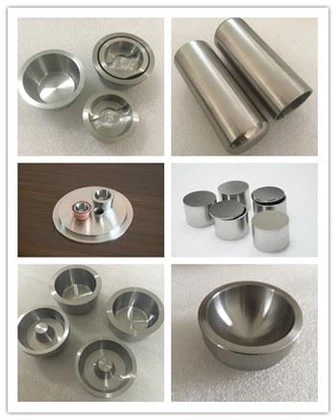
What are refractory metals?Properties and applications of refractory metals .
Refractory metals are a class of metals that exhibit exceptional resistance to heat, wear, and corrosion. These metals have high melting points and are able to maintain their mechanical properties even at elevated temperatures. The most commonly recognized refractory metals include tungsten, molybdenum, tantalum, niobium, and rhenium. These metals are utilized in various industries and applications where their unique properties are beneficial, such as aerospace, defense, electronics, and high-temperature applications. The term "refractory" refers to the ability of these metals to withstand extreme conditions without significant degradation.
1,Tungsten: Tungsten has the highest melting point of all metals, reaching a temperature of about 3,422 degrees Celsius (6,192 degrees Fahrenheit). It has excellent mechanical strength, high density, and good corrosion resistance. Tungsten is commonly used in electrical contacts, filaments for incandescent light bulbs, high-speed tools, and as an alloying element in steel.
2,Molybdenum: Molybdenum has a high melting point of approximately 2,623 degrees Celsius (4,753 degrees Fahrenheit) and is characterized by its excellent strength, good thermal and electrical conductivity, and resistance to corrosion. It is used in applications such as high-temperature furnace components, missile and aircraft parts, electrical contacts, and as a catalyst in chemical processes.
3,Tantalum: Tantalum is known for its excellent corrosion resistance, particularly against acids. It has a melting point of around 2,996 degrees Celsius (5,425 degrees Fahrenheit) and is commonly used in the production of electronic components, such as capacitors and high-power resistors. Tantalum is also used in the aerospace industry, chemical processing equipment, and medical implants.
4,Niobium: Niobium has a relatively low melting point compared to other refractory metals, around 2,468 degrees Celsius (4,474 degrees Fahrenheit). It is highly resistant to corrosion, has good ductility, and superb superconducting properties at very low temperatures. Niobium is used in the production of superalloys for jet engines, superconducting magnets, high-temperature furnace components, and in the nuclear industry.
5,Rhenium: Rhenium has one of the highest melting points among all elements, at approximately 3,180 degrees Celsius (5,756 degrees Fahrenheit). It is known for its excellent resistance to creep deformation and its ability to form alloys with other metals, enhancing their temperature strength. Rhenium is used in the aerospace industry for turbine blades, in catalytic converters, and various high-temperature applications.
Refractory metals are valued for their unique combination of properties, making them essential in many critical industries and applications that require high performance under extreme conditions.Here are some key properties and applications of refractory metals:
High Melting Point: Refractory metals have extremely high melting points, allowing them to maintain their structural integrity at elevated temperatures. This makes them ideal for applications involving high heat, such as in furnaces, rocket nozzles, and turbine blades.
Excellent Mechanical Strength: Refractory metals exhibit exceptional strength, making them suitable for applications requiring high load-bearing capacity and structural stability. They are used in aerospace components, armor piercing ammunition, and high-speed tools.
Superior Corrosion Resistance: Refractory metals possess excellent resistance to corrosion, oxidation, and chemical attack. This property makes them crucial in environments where materials are exposed to harsh conditions, such as in chemical processing equipment, electrodes, and heat exchangers.
Good Thermal Conductivity: Refractory metals have relatively high thermal conductivity, allowing them to efficiently conduct heat. This property is beneficial in heat sinks, thermal management systems, and electrical contacts.
Electrical Properties: Some refractory metals, such as tungsten and molybdenum, have desirable electrical properties, including low electrical resistivity and high thermal stability. These metals are employed in electrical contacts, filaments, and as conductive components in electronic devices.
The applications of refractory metals are diverse and widespread across various industries, including:
Aerospace and Defense: Refractory metals are extensively used in aerospace applications due to their high strength, corrosion resistance, and ability to withstand extreme heat. They are found in aircraft parts, heat shields, nozzles, and turbine blades.
Electronics and Semiconductors: Refractory metals find applications in the electronics industry, particularly in the production of electrical contacts, filaments in lamps, X-ray tubes, and as interconnects in microelectronics.
Energy Industry: Refractory metals are used in energy generation and storage systems due to their ability to withstand high temperatures, corrosion resistance, and electrical conductivity. They are employed in nuclear reactors, solar thermal power plants, and high-temperature furnace components.
Medical and Dental: Refractory metals are utilized in medical implants and instruments due to their biocompatibility, corrosion resistance, and strength. Titanium alloys (including refractory metal elements) are commonly used in orthopedic implants, dental implants, and surgical instruments.
Chemical Processing: Refractory metals are utilized in the chemical industry due to their excellent resistance to corrosion and high temperatures. They are employed in equipment for handling corrosive chemicals, catalysts, and heat exchangers.
These are just a few examples of the broad range of applications where refractory metals play a vital role, showcasing their exceptional properties and versatility.