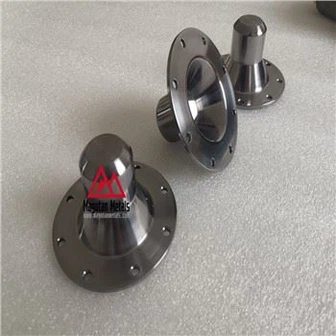
What is the development of ion implantation parts?
The development and widespread adoption of ion implanted parts have had a profound impact on various industries. It has enabled significant advancements in semiconductor technology, surface modification, optics, and materials science. Ion implantation continues to be a critical technology for enhancing the performance, functionality, and longevity of materials and devices across multiple sectors.
1. Early Years:
The history of ion implantation dates back to the mid-20th century when researchers began investigating the effects of bombarding solid surfaces with high-energy ions. In the 1950s, scientists began experimenting with ion implantation techniques to modify the properties of materials. The early years focused on fundamental research and understanding the principles of ion implantation.
2. Semiconductor Industry:
Ion implantation gained prominence in the semiconductor industry during the 1960s and 1970s. It became an essential process for doping silicon wafers, a key step in the fabrication of transistors and integrated circuits. Ion implantation allowed precise control over doping levels and depth profiles, enabling the production of highly advanced and miniaturized electronic devices. This technology revolutionized semiconductor manufacturing, enabling the development of smaller, faster, and more efficient electronic components.
3. Surface Modification and Hardening:
Ion implantation also found applications in surface modification and hardening of materials. By implanting ions into the surface of materials such as metals, ceramics, and polymers, the properties of the surface could be altered significantly. This process enhanced wear resistance, corrosion resistance, and hardness, expanding the range of applications for various materials. Ion implantation has been used in industries such as automotive, aerospace, tooling, and biomedical, where improved surface properties are crucial for performance and durability.
4. Optics and Optoelectronics:
Ion implantation has played a crucial role in the development of optical and optoelectronic devices. By implanting ions into materials such as glass, lenses, and optical fibers, their refractive index can be precisely controlled, allowing for the fabrication of specialized optical components. Ion implantation has contributed to advancements in fiber optics, laser technology, photonic devices, and telecommunications.
5. Ion Beam Analysis:
Alongside the development of ion implantation, ion beam analysis techniques also emerged. Ion beam analysis involves using ion beams to probe and analyze the composition, structure, and properties of materials. Techniques such as Rutherford backscattering spectroscopy (RBS) and nuclear reaction analysis (NRA) have been instrumental in understanding the effects of ion implantation and characterizing implanted materials.
6. Current Trends and Future Directions:
In recent years, ion implantation technology has continued to advance. New ion species, such as helium and hydrogen, have been used for unique purposes, including materials research, defect engineering, and thin film growth. Additionally, research efforts are focused on developing novel ion sources, improving implantation equipment, and exploring new materials for ion implantation applications.