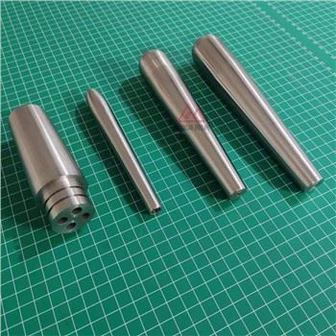
what makes tungsten so strong?
Tungsten is a high-strength metal known for its exceptional mechanical properties, which can be attributed to several key factors. Here's a detailed exploration of what makes tungsten so strong.
1,Atomic Structure:
Tungsten possesses a body-centered cubic (bcc) crystal structure, which contributes to its strength. In this structure, the tungsten atoms are arranged in a way that allows for strong metallic bonding, leading to high cohesive energy and stability. Additionally, the small atomic size of tungsten results in a close-packed atomic arrangement, enhancing the metal's strength and rigidity.
2,High Melting Point:
Tungsten has the highest melting point of all metals, at around 3,422°C (6,192°F). This remarkable feature is a result of its strong metallic bonds and the stability of its crystal lattice. The high melting point reflects the strength of the bonds between tungsten atoms, making it resistant to deformation and structural degradation at high temperatures.
3,Interatomic Bonding:
Tungsten exhibits strong metallic bonding, where the delocalized electrons flow freely throughout the material, creating a robust attraction between atoms. This type of bonding results in a high degree of plastic deformation resistance, making tungsten highly resistant to fracturing under stress.
4,Hardness and Toughness:
Tungsten is renowned for its exceptional hardness and toughness. Its hardness is primarily due to its strong atomic bonding and crystal structure, which resist the penetration of external forces. Additionally, its toughness, or ability to resist fracturing, is a result of its high tensile strength and ductility, allowing it to deform plastically before breaking.
5,Grain Size and Purity:
The strength of tungsten is also influenced by its grain size and purity. Fine-grained tungsten exhibits improved strength due to grain boundary strengthening, where the interfaces between individual crystalline grains impede dislocation movement, enhancing overall material strength. Moreover, high purity tungsten, free from impurities and defects, ensures the integrity of its atomic structure, contributing to its strength.
6,Tungsten Alloys:
Tungsten is often used in alloys to further enhance its strength and tailor its properties for specific applications. For instance, tungsten carbide, composed of tungsten and carbon, is extremely hard and wear-resistant, making it suitable for cutting tools, drills, and other high-stress applications. Tungsten-nickel-iron alloys, known as "heavy alloys," are renowned for their high density and exceptional strength, ideal for applications in aerospace, defense, and radiation shielding.
In conclusion, the exceptional strength of tungsten can be attributed to its atomic structure, high melting point, strong interatomic bonding, hardness, toughness, grain size, purity, and its ability to form high-strength alloys. These combined factors make tungsten a highly sought-after material in various industries where strength and reliability are paramount.