A mysterious alloy for military use
It is a mystery alloy to most people because they are not familiar with it or even have never heard of it. However, it was invented in the 1930s and has been around for nearly a hundred years now!
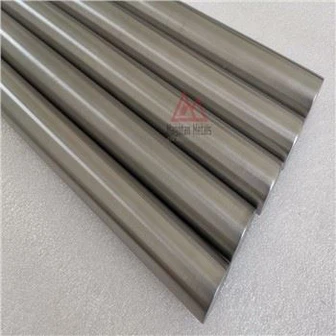
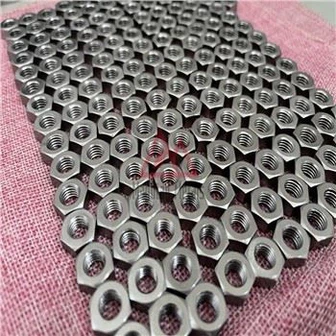
It is based on W (W content is 82%-98%), and add Ni, Fe, Cu, Co, Mn and other elements of the alloy, because of a series of excellent characteristics and has been widely used in aerospace, weapons, nuclear industry and other military industry.
It is tungsten alloy! [W is the elemental symbol for the strategic metal tungsten.
The good properties of tungsten alloys include: high density (> 2 times the density of steel); High strength; Good ray absorption capacity (30%-40% higher than lead); Good machining performance; Good electrical conductivity, thermal conductivity and low coefficient of thermal expansion; Good weldability and surface electroplating; Good plasticity, corrosion resistance and high temperature oxidation resistance; And so on.
So, what are the applications of tungsten alloys in the aerospace industry?
For example, gyroscopes, balance blocks, shock absorbers, and so on.
As we all know, navigation gyroscopes are the heart of navigation and control systems such as missiles, rockets, submarines, aircraft, satellites and torpedoes. Although a variety of advanced navigation technology has emerged in the world, but as inertial guidance gyroscope is still the most widely used in the world a navigation instrument.
According to the literature, copper or steel was used as the outer edge of the gyroscope, and its accuracy and stability were relatively low. In World War II, the United States had used tungsten nickel-copper alloy (90W-6Ni-4Cu) instead of copper (or steel) as the outer edge rotor, and its angular momentum was increased by more than 70%. The accuracy and stability of the instrument were significantly improved. In the 1960s, China began to study the application of tungsten alloy in the aerospace industry.
At present, many indicators of tungsten alloys for aerospace use in China have reached the advanced international level.
What are the applications of tungsten alloy in weapon industry?
That's a little too much!
Machine guns, for example, large diameter of kinetic energy penetrator core shell penetrator bomb core, rod type of kinetic energy penetrator core, tactical missile damage can play the fragment, medicine form cover, bullets and shells with the voyage, shrapnel and missile warhead (hundreds of kilograms) of tungsten alloy projectile or (of) tungsten alloy small arrow bomb and torpedo, vessels, tanks and other weapons of gyro turn outer daughter, weight, And so on.
Finally, let's look again: What are the applications of tungsten alloys in the nuclear industry?
Lead was a widely used shielding material. Because the density of lead is 11.3g/cm3. Considering that the ability of metal materials to absorb X-rays and γ-rays is directly proportional to their density, tungsten alloys with a density above 17c/m3 naturally have better ray absorption capacity. The results show that the shielding effect of tungsten alloy is more than 1.5 times that of lead. In addition, lead is soft, easy to scratch, and can even be cut with a knife, while tungsten alloy is relatively hard. What's more, lead is a heavy metal that pollutes the environment and is harmful to human health. Therefore, tungsten alloy makes an ideal nuclear fuel storage and shielding material against radiation. In addition, tungsten-nickel-iron alloy and tungsten-tantalum alloy with high melting point, high plasticity, low yield strength and good impact toughness have been used to make a kind of thin-walled large chain shell to ensure the normal operation of the instrument in the event of atomic explosion.