Why use high-temperature fasteners: Molybdenum screws
As the name suggests, high-temperature fasteners are specially designed to withstand high temperatures. Why are they needed?
Regular metal fasteners have a tendency to melt when the temperature crosses the quadruple digits, that is, 1000 °F or more. At such high temperatures, these fasteners can undergo oxidation, which is basically a faster form of corrosion and rusting.
One example is machinery that gets heated above a certain temperature. When this happens, the metal fasteners attached to it expand and exert pressure on the holes that they are driven into. When the machinery is not in use it cools down, which contracts the metal fasteners and makes them loose within the holes.
This is one reason for introducing special high-temperature fasteners which have the capability to withstand the alternate phases of extreme heat and cool down efficiently without getting damaged.
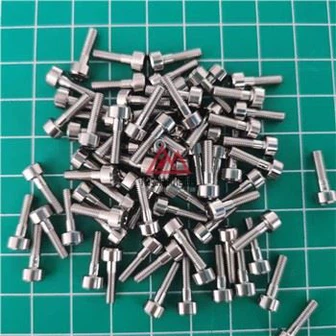
Molybdenum screws offer several advantages compared to other types of screws or fasteners. Here are some of the key benefits of molybdenum screws:
1,High heat resistance:
Molybdenum has an exceptionally high melting point (2620 degrees Celsius or 4748 degrees Fahrenheit), making molybdenum screws ideal for applications that involve extreme temperatures. They can maintain their structural integrity and mechanical properties even at elevated temperatures, making them suitable for use in high-temperature environments such as furnaces, engines, and aerospace applications.
2,Good thermal conductivity:
Molybdenum exhibits excellent thermal conductivity, allowing it to efficiently transfer heat away from the point of contact. This property is beneficial in applications where heat dissipation is crucial, helping prevent overheating and potential damage to surrounding components.
3,Low coefficient of thermal expansion:
Molybdenum has a low coefficient of thermal expansion, meaning it expands very little when exposed to high temperatures. This property helps molybdenum screws maintain their dimensional stability and prevent loosening or failure due to thermal cycling. They can withstand repeated heating and cooling cycles without significant changes in their size, ensuring reliable and secure fastening.
4,Excellent corrosion resistance:
Molybdenum forms a protective oxide layer when exposed to air or certain corrosive environments, providing a barrier against oxidation and rusting. This inherent corrosion resistance makes molybdenum screws suitable for use in aggressive and corrosive atmospheres, such as chemical processing plants, marine environments, and other applications where corrosion can compromise the integrity of the fasteners.
5,High tensile strength:
Molybdenum screws exhibit high tensile strength, allowing them to withstand significant loads and mechanical stresses. This strength makes them reliable and durable fasteners, even in demanding applications where they are subjected to heavy loads or vibrations.
6,Good fatigue resistance:
Molybdenum screws have good fatigue resistance, meaning they can withstand repeated cycles of stress without experiencing progressive fatigue or failure. This property is particularly important in applications where the screws are exposed to constant vibrations or dynamic loads, ensuring long-term reliability and performance.