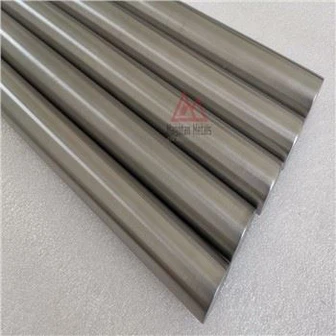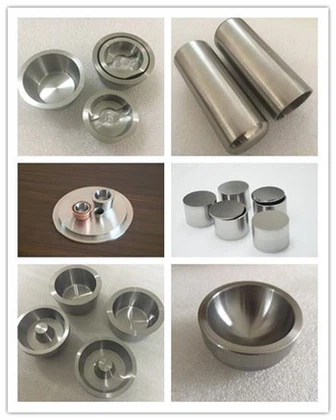
The Global Tungsten Production: A Key Resource for Diverse Industrie
Introduction: Tungsten, known as "the metal with the highest melting point," plays a vital role in various industries worldwide. With its exceptional physical properties and extensive range of applications, tungsten has become an essential resource. In this article, we will explore the global tungsten production, its usage, major producers, and the future trends influencing this valuable metal.
Tungsten Properties and Characteristics: Tungsten, with a chemical symbol W, is a heavy and dense metal known for its high melting point of 3,422 degrees Celsius (6,192 degrees Fahrenheit). It exhibits outstanding strength and durability, making it an ideal material for a wide range of applications. Moreover, tungsten has excellent corrosion resistance and low thermal expansion, further enhancing its suitability for various industries.
Tungsten Production: The global production of tungsten mainly occurs through mining and subsequent processing. Tungsten ores, primarily Wolframite and Scheelite, are commonly found in countries such as China, Russia, Canada, Bolivia, and Austria.
China has been the largest producer of tungsten for several years, producing approximately 80% of the global supply. Other significant producers include Russia, Vietnam, Bolivia, and Canada. These countries collectively account for a substantial portion of the global tungsten production.
Applications of Tungsten: Tungsten's unique properties have led to its extensive use in diverse industries. Some significant applications of tungsten are:
1,Manufacturing Industry:
Tungsten is widely utilized in the manufacturing sector. Its high melting point and exceptional hardness make it an ideal material for cutting tools, drills, saws, and components for industrial machinery. Tungsten-based alloys are used to make electrical contacts, filaments for lamps, and heating elements due to their excellent electrical conductivity properties.
2,Aerospace and Defense:
The aerospace and defense industries heavily rely on tungsten for its high strength-to-weight ratio and ability to withstand extreme conditions. Tungsten alloys are used in aircraft manufacturing for wing structures, missile components, and armor-piercing projectiles.
3,Electronics and Electrical Industry:
Tungsten is crucial in the electronics industry due to its thermal and electrical conductivity. It is used in the production of semiconductors, integrated circuits, and electrical contacts. Additionally, tungsten wires are used in incandescent light bulbs and cathode-ray tubes.
4,Medical Applications:
Tungsten is employed in medical devices due to its biocompatibility and radiopacity. It is used in X-ray tubes, radiation shielding, and medical equipment such as surgical tools and implants.
Future Trends and Challenges: The global tungsten market is influenced by various factors that shape its future outlook. Some notable trends and challenges include:
1,Recycling and Sustainability:
As tungsten is a finite resource, there is increasing emphasis on recycling to reduce the reliance on primary sources. Recycling tungsten from scrap materials can help conserve resources and minimize environmental impact.
2,Price Volatility:
The prices of tungsten can be subject to fluctuations due to factors such as supply-demand dynamics, geopolitical tensions, and government policies. Market participants need to navigate these price changes to ensure stability and profitability.
3,Technological Advances:
Advancements in technology can lead to the development of new applications that require tungsten, further driving demand. For example, the surge in renewable energy technologies such as wind turbines and solar panels utilizes tungsten in components like rotors and connectors.
Conclusion: Tungsten is an indispensable resource with remarkable properties that find applications across various industries. Its high melting point, exceptional hardness, and excellent electrical and thermal conductivity make it a sought-after metal. With China being the leading producer, other countries are also contributing significantly to the global tungsten production. As we move towards a more sustainable and technologically advanced future, tungsten's importance is likely to grow, making it a key material for many critical applications. The industry will continue to navigate challenges, such as recycling and price volatility, to ensure the steady supply of this valuable metal.