Magnetron sputtering molybdenum target
Magnetron sputtering molybdenum target
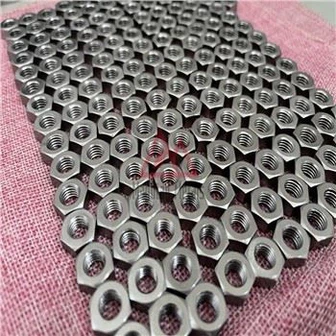
Image of magnetron sputtering molybdenum target
The working principle of magnetron sputtering mammography is electronic in under the action of the electric field E, in the process of flying to the substrate and argon atoms collide, make its ionization produced Ar positive ions and new electronic, new electronic flew to substrate, Ar ion under the effect of electric field accelerates to the cathode target, and take the high-energy bombarding target surface, make the sputtering target material.
In sputtering particles, neutral target atoms or molecules are deposited on the substrate to form a film, and the generated secondary electrons will be affected by electric and magnetic fields, resulting in the direction drift pointed by E (electric field) ×B (magnetic field), referred to as E×B drift, whose trajectory is approximately a cycloid of magnetron sputtering. If it is a circular magnetic field, the electrons move in a circular motion on the target surface in the form of an approximate cycloid. Their motion path is not only very long, but also bound in the plasma region close to the target surface. In this region, a large amount of Ar is ionized to bombard the target, thus achieving a high deposition rate. With the increase of the number of collisions, the energy of the secondary electrons is exhausted, and they gradually move away from the target surface, and finally deposit on the substrate under the action of the electric field E.
Magnetron sputtering molybdenum target has high strength, high temperature resistance, wear resistance, corrosion resistance and other excellent performance, its purity of 99.95%, density 10.2g/cubic cm, melting point 2610℃, boiling point 5560℃. According to the shape type of molybdenum target, it includes rectangular magnetron sputtering molybdenum target, circular magnetron sputtering molybdenum target and cylindrical tube magnetron sputtering molybdenum target. Sputtering targets are mainly used in the electronics and information industry, such as integrated circuits, information storage, liquid crystal display screens, laser memory, electronic control devices, etc. In addition, it can also be used in the field of glass coating, but also can be used in wear-resistant materials, high temperature corrosion resistance, high-grade decorative supplies and other industries.