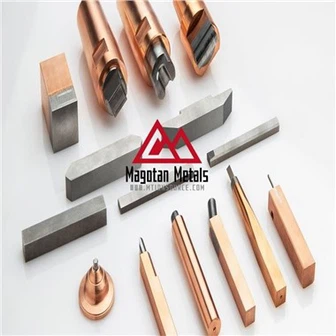
G6 Molybdenum Target
The first G6 -generation ultra-large -size high -end molybdenum target developed by China, which has completely independent intellectual property rights, also marks China breaking the monopoly of Europe on this core technology.
Everyone knows that smartphones, tablets, color TVs, etc. because we can get in contact with them almost every day. From time to time, they are touching and stare at their OLED screens. With the sliding of your fingers, we look down. Of course, the premise is that you are watching mobile devices or portable computers.
Molybdenum targets, also known as molybdenum sputtering targets, may be unfamiliar to many people, so you are likely to not know that it is one of the core materials of the semiconductor industry. Key core raw materials in LCD tablets. However, you can also be said to be familiar with it. Not only can it be seen everywhere, but it may also be accompanied by a few hours or even ten hours of the day. That's right, this "it" is the mobile phone's OLED screen.

As we all know, materials are the foundation. All products are inseparable from materials. High-end products and high-tech products have high requirements for materials. So, when you see this, will you be a little curious? Why is molybdenum the first choice material for tablet display sputtering targets?
Chromium was used as wiring material for flat displays. However, the times are progressing, technology is developing, and tablet monitors are also in the process of large-scale and high precision. Chromium can no longer meet the higher requirements of the comparative impedance of tablet materials -smaller than impedance. Moreover, we must also consider environmental protection issues. Therefore, molybdenum, which has the characteristics of high melting points, high -conductivity, better corrosion resistance, etc., and its ratio of impedance and membrane stress is only 1/2 of chromium, and molybdenum is an environmentally friendly material, no need to worry about environmental pollution. Therefore, molybdenum has become one of the preferred materials for tablet display sputtering targets. It is very important that according to experts, molybdenum can also greatly enhance the performance of the liquid crystal display brightness, contrast, color, and other properties, as well as extend its service life. Molybdenum targets can form a film on various substrates, which are widely used in electronic components and electronic products.
Performance of molybdenum sputtering target
The performance of the molybdenum sputtering target is the same as its source material (pure mo -molybdenum or molybdenum alloy). Molybdenum is a metal element that is mainly used for steel. Most of the industrial molybdenum dioxide suppression is used directly for steelmaking or cast iron. A small amount of molybdenum smelting into molybdenum or molybdenum foil is used for steelmaking. It can improve the strength, hardness, welding, and toughness of the alloy, as well as high temperature and corrosion resistance.
The application of a molybdenum sputtering target in a flat display
In the electronics industry, the application of molybdenum sputtering targets is mainly concentrated in the plane display, film solar cell electrodes, wiring materials, and semiconductor-blocking layer materials. For base materials, good corrosion resistance and environmental protection performance. Molybdenum has the advantages of half-resistance and membrane stress only half of the chromium and has no environmental pollution problem. It has become one of the first choice materials for tablet monitor sputtering targets. In addition, adding molybdenum elements to LCD components can greatly improve the brightness, contrast, color, and life of LCD.
Application of molybdenum sputtering targets in film solar photovoltaic batteries
CIGS is an important solar cell that is used to convert sunlight into electrical energy. CIGS consists of four elements: copper (CU), 铟 (in), 镓 (GA), and selenium (SE). Its full name is copper-selenium film solar cell. CIGS has the advantages of strong light absorption capacity, good power generation stability, high conversion efficiency, long time of power generation, large power generation, low production cost, short energy recovery period, etc.
Molybdenum targets are mainly used to form electrode layers of CIGS thin film batteries. Molybdenum is located at the bottom of the solar cell. As the back of the solar cell, it plays an important role in the formation of CIGS thin film crystals.
The touch screen uses molybdenum sputtering target
Molybdenum (MB) target is used for conductive layers in high-definition TV, tablet, tablet, smartphones, and other mobile devices, covering layers and blocking layers.