



Spot Welding Electrodes
Types of Spot Welding Electrodes:
•Type P
•Type R
•Type C
•Type E
•Type F
Product Introduction
Spot welding electrodes description
1. The resistivity of copper alloy is lower than that of aluminum alloy and the thermal conductivity is stronger, so the welding of copper and copper alloy is relatively difficult, requiring large heat output and large pressure in a short time. Copper alloys with a thickness of less than 1.5mm, especially those with low electrical conductivity, are most widely used in production. Pure copper has extremely high electrical conductivity, and spot welding is difficult.
It is usually necessary to add a gasket between the electrode and the workpiece or use a composite electrode with tungsten embedded in the electrode tip to reduce heat dissipation to the electrode. The diameter of the tungsten electrode is usually 3-4mm.
Spot welding electrodes application
The spot welding electrode is an important but easily worn part of the spot welding machine. Its functions are listed as follows:
(1) Transmission current - During spot welding, the welding current is transmitted by the electrode, and the current density flowing through the working surface of the electrode is very large. The current density during spot welding is tens to hundreds of times that of common wires, which has exceeded the capacity of ordinary wires.
(2) Transfer pressure - During spot welding, certain welding pressure and forging pressure should be applied to the weldment through the electrode. Depending on the material to be welded, the electrode pressure is as high as tens of kN. When welding low carbon steel, the internal pressure is 30-140MPa, when welding stainless steel, it is 250-400MPa, and when welding high-temperature alloys, it is as high as 400-900MPa. The working surface of the electrode is in direct contact with the solder joint, and it bears the high temperature generated by the welding, so the electrode must have sufficient high-temperature strength. Otherwise, the working surface of the electrode will be rapidly deformed and crushed, making it impossible to work.
(3) Heat dissipation - During spot welding, most of the heat in the welding area is dissipated by conduction from the upper and lower electrodes. The thinner the welded plate, the more heat it dissipates. When welding low carbon steel with a thickness of 1mm, the heat dissipated by the electrode accounts for about 70-80% of the total heat of spot welding.
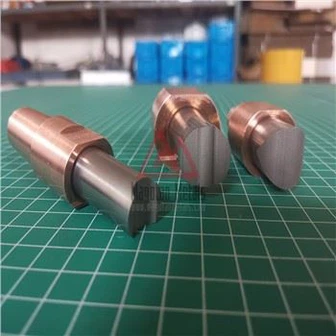
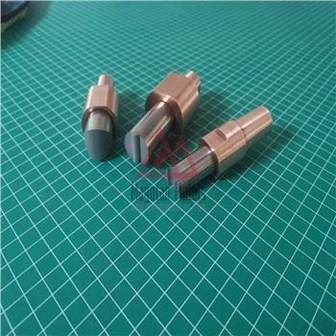
Spot welding electrodes show


Our company

Our After-sales service

Hot Tags: spot welding electrodes, China, suppliers, manufacturers, factory, buy, price, discount, in stock, made in China
You Might Also Like




Send Inquiry
