

What is Molybdenum Fasteners
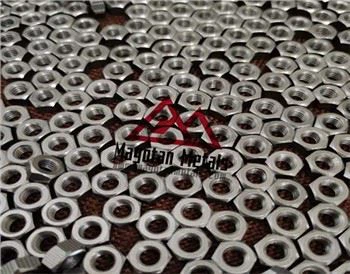
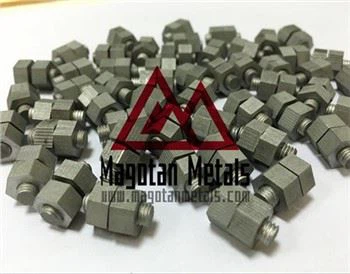
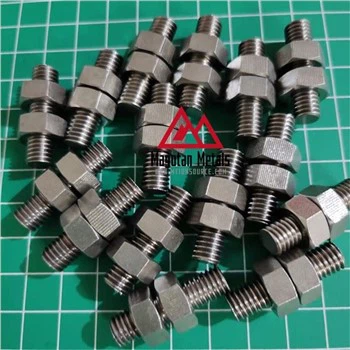
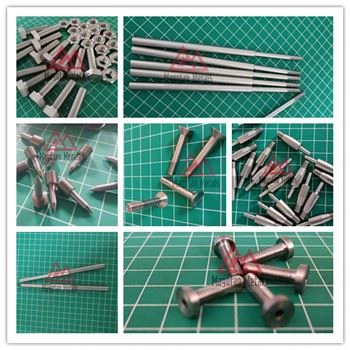
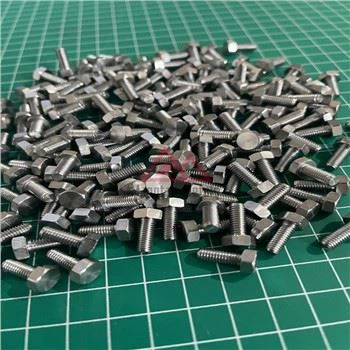
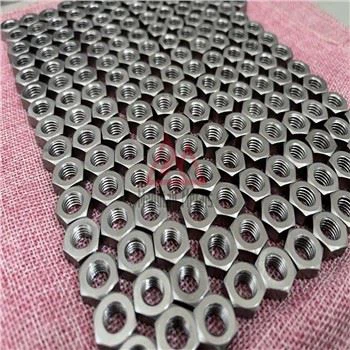
Molybdenum Fasteners are hardware components like bolts, screws, nuts, and washers that are made primarily from the metal molybdenum. Molybdenum is a refractory metal that is known for its high strength, high melting point, and excellent corrosion resistance. These properties make molybdenum fasteners ideally suited for use in environments where high temperatures, corrosive chemicals, or other harsh conditions are present. Molybdenum fasteners are commonly used in the aerospace, defense, chemical processing, and oil and gas industries.
Advantages of Molybdenum Fasteners
Excellent Corrosion Resistance: Molybdenum is highly resistant to corrosion and offers better resistance than stainless steel. This makes it ideal for use in harsh environments such as marine, chemical, and oil and gas industries.
High Temperature Resistance: Molybdenum fasteners can withstand high temperatures up to 1,900°C without losing their mechanical properties. This makes them ideal for use in high-temperature applications such as engines, turbines, and nuclear reactors.
High Strength: Molybdenum is a strong and durable metal that offers better strength than other materials such as titanium, aluminum, and brass. This makes molybdenum fasteners ideal for use in applications that require high strength and durability.
Lightweight: Molybdenum is a lightweight metal that offers better weight-to-strength ratio than other materials. This makes molybdenum fasteners ideal for use in applications where weight is a crucial factor such as aerospace and automotive industries.
Low Coefficient Of Thermal Expansion: Molybdenum has a low coefficient of thermal expansion, meaning it will not expand or contract significantly with temperature changes. This makes it ideal for use in precision instrumentation and other applications where dimensional stability is critical.
Non-Magnetic: Molybdenum is a non-magnetic metal that is ideal for use in applications that require non-magnetic properties such as MRI machines, electronic devices, and scientific instruments.





Why Choose Us
High Quality
We take pride in the craftsmanship of our products and ensure that each one meets our strict standards for quality.
Rich Experience
Our company has many years of production work experience. The concept of customer-oriented and win-win cooperation makes the company more mature and stronger.
Competitive Price
We have professional sourcing team and cost accounting team, stive to reduce cost and profit and provide you a good price.
One stop solution
From the begining inquiry and throughout the entire process until you receive the goods. we are dedicated to supporting you every step of the way.
Types of Molybdenum Fasteners
Molybdenum Bolts
Our molybdenum bolts are available in various sizes and thread configurations, providing a secure and robust fastening solution for various applications. From general manufacturing to aerospace and automotive industries, our molybdenum bolts are designed to meet your specific needs.
Molybdenum Nuts
Our molybdenum nuts are meticulously crafted to provide reliable and secure fastening. These nuts’ exceptional strength and corrosion resistance ensure optimal performance and durability in demanding environments.
Molybdenum Washers
Our molybdenum washers are crafted precisely to distribute loads evenly, providing effective sealing and protection against loosening. These washers are essential for maintaining stability and preventing damage in critical assemblies.
Molybdenum Screws
Our molybdenum screws offer excellent fastening capabilities in applications where reliability and strength are paramount. Engineered with precision, these screws ensure secure and lasting connections.
Molybdenum Stud Bolts
Our molybdenum stud bolts are designed for applications that require threaded connections with exceptional strength and resistance to high temperatures and corrosive environments. They provide reliable and durable fastening solutions in critical assemblies.
Molybdenum Anchor Bolts
Our molybdenum anchor bolts are specifically engineered for secure anchoring in various structures and construction projects. These bolts’ high strength and corrosion resistance offer long-lasting stability and reliability.
How Molybdenum Fasteners Are Made
The following is the manufacturing process of molybdenum fasteners
Raw Material Procurement: Molybdenum is a rare metal. When purchasing, you need to choose high-quality raw materials, such as fused molybdenum rods, molybdenum plates, etc.
Cutting And Processing: The molybdenum raw materials are subjected to necessary cutting, processing, polishing and other treatments to achieve the specified size and shape requirements.
Sintering: Put the pretreated molybdenum material into a high-temperature furnace and undergo sintering treatment. At high temperatures, the molecular structure of molybdenum materials changes, the density increases, and the strength is also improved.
Machining: The forming accuracy of molybdenum materials after sintering is not high. Therefore, machining processes such as turning, milling, drilling, etc. are required to achieve the shape, size and surface roughness requirements of fasteners such as bars, plates, screws, etc.
Surface Treatment: Because molybdenum material easily reacts with air and is easily oxidized. Therefore, surface treatment, such as sandblasting, polishing, coating, etc., is required to increase the corrosion resistance of molybdenum materials.
Inspection And Packaging: After the molybdenum fasteners are made, quality inspection is required, such as appearance inspection, dimensional inspection, mechanical property inspection, etc. After passing the test, it will be packaged, such as plastic bags, foam protection, carton packaging, etc.
What Are The Uses Of Molybdenum Fasteners
Molybdenum fasteners are high-strength, high-corrosion-resistant fasteners, mainly used for fixing and connecting in environments that require resistance to high temperatures, high pressures, and strong acid and alkali. The following are the specific uses of molybdenum fasteners.
Petrochemical Industry
In workplaces such as oil refining, chemicals, and natural gas, many equipment need to be disassembled and repaired frequently. Molybdenum fasteners can meet their high strength and corrosion resistance requirements to ensure the safe operation of the equipment.
Aerospace Industry
In the aerospace field, high-tech materials such as carbon fiber reinforced composite materials and high-strength steel and aluminum alloys are used more and more widely, and the high strength and lightweight characteristics of molybdenum fasteners make them essential fastener.
Nuclear Energy Industry
In the field of nuclear energy, the safety and stability of equipment are very important. Molybdenum fasteners can withstand radioactive damage and high temperature and high pressure, so they are widely used in nuclear energy facilities such as nuclear reactors and nuclear power plants.
Medical Devices
Molybdenum fasteners are mainly made of high-purity molybdenum and have low magnetism, low heat dissipation and antibacterial properties, so they are widely used in medical devices, surgical instruments and other fields.

Molybdenum fasteners are also called rolling fasteners. The working principle of molybdenum fasteners is to use the high strength and elastic recovery of molybdenum materials to generate about 20% pre-compression between threads and washers, thereby forming the final tightening force. Because molybdenum's elastic modulus (i.e., the hardness of steel) is more than twice that of steel, molybdenum materials can withstand higher fastening forces under stress conditions.
Molybdenum fasteners are mainly composed of three main components: nuts, screws and washers. The screws and nuts have some extra design that allows them to fit together during assembly and create a fastened structure. The high elastic recovery of molybdenum materials allows the fastening structure to continue to maintain a preloaded state after assembly, thereby preventing loosening and failure.
The working principle of molybdenum fasteners is: under the correct preload and assembly sequence, a preload state is generated between the thread and the washer. This state helps resist vibration, fatigue, and loss of tightening force and maintains the system's tightening force. If the tightening force fails, molybdenum fasteners are designed so that they absorb the remaining tightening force, preventing damage to the system.
What Is The High Temperature Resistance Of Molybdenum Fasteners
Molybdenum material has excellent high temperature resistance, and molybdenum fasteners also have good high temperature resistance. The following is the content of the high temperature resistance of molybdenum fasteners.
High Temperature Strength
Molybdenum fasteners still have high strength under high temperatures. Under high temperature conditions of 1200°C, the strength of molybdenum fasteners will only decrease by less than 5%.
Oxidation Resistance
Molybdenum fasteners also have good oxidation resistance at high temperatures. Thermal oxidation treatment can form an oxide film on the molybdenum surface to protect the molybdenum matrix from oxidation and has good corrosion performance.
Thermal Stability
Molybdenum fasteners will not undergo significant thermal instability at high temperatures, and will not suffer from plastic deformation, fracture, etc.
Low Expansion Coefficient
Molybdenum fasteners have a small expansion coefficient, that is, they expand to a small extent at high temperatures, ensuring the dimensional stability of the fasteners and the stability of the fastening force.
What Factors To Consider When Choosing Molybdenum Fasteners
The Following Factors Need To Be Considered When Selecting Molybdenum Fasteners.


Strength: Molybdenum fasteners must be strong enough to support loads and maintain connections. Strength is one of the main factors that must be considered when selecting fasteners.
Corrosion Resistance: For molybdenum fasteners used in humid, high temperature and corrosive environments, their corrosion resistance is a factor that must be considered.
Manufacturing Standards: Compliance with international standards and quality certifications must be considered when selecting molybdenum fasteners. When choosing a fastener supplier it is best to choose an ISO certified supplier.
Appearance: The appearance of molybdenum fasteners is also one of the considerations, and its appearance design and decorative performance need to be considered.
Installation Method: When selecting molybdenum fasteners, the installation method must be considered, such as threading, bayonet or welding.
Price: The price of molybdenum fasteners is also a factor that needs to be considered when choosing. Price is not the only factor that determines your choice, but it can influence the purchasing decision.
The main difference between molybdenum fasteners and other metal fasteners is the choice and nature of the material. Molybdenum is a highly heat-resistant and corrosion-resistant metal suitable for use in high temperatures, high pressures and corrosive environments. In contrast, other metallic materials (such as steel, copper, aluminum, etc.) may suffer from corrosion, deformation, and failure in these environments.
Molybdenum fasteners also have high strength and hardness and are often used in applications that need to withstand high stresses and heavy loads. They also have a low coefficient of linear expansion and excellent thermal conductivity.
What Are The Advantages Of Using Molybdenum Fasteners Over Other Materials
Molybdenum is a high-temperature metal that has many advantages that make it an ideal material for making fasteners. Here are the advantages of using molybdenum fasteners over other materials.
High Temperature Performance
Molybdenum has a melting point as high as 2620°C, allowing it to be used in extreme high temperature environments, such as in the aerospace and energy fields.
High Strength
Compared with other materials, molybdenum has higher tensile strength and compressive strength, so it can withstand greater tension and pressure.
Oxidation Resistance
Molybdenum has good antioxidant properties and can maintain its structural stability under high temperatures for a long time, thereby extending the service life of fasteners.
Corrosion Resistance
Molybdenum has good corrosion resistance and can be used in harsh environments such as strong acid, strong alkali and water vapor.
Low Thermal Expansion Coefficient
Molybdenum has a very low thermal expansion coefficient, so it can maintain relatively stable dimensions at constant temperature and avoid loosening or deformation of fasteners.
Good Workability
Molybdenum has good plasticity and workability and can be manufactured into fasteners of various shapes and sizes to meet different application needs.
How To Properly Install And Maintain Molybdenum Fasteners
Install Molybdenum Fasteners
Find The Right Drill Bit: Before installing the molybdenum fasteners, you'll need to drill a hole to fit the drill bit. Choose a drill bit that fits the hole, taking into account the diameter of the threads, depth, and size of the hole.
Drilling: When drilling with a drill, be sure to hold the drill perpendicular to the work surface. If it's slanted or inaccurate, you'll get an unstable thread. Also make sure not to drill too deep or too shallow, but to the required depth.
Insert The Molybdenum Fastener Into The Hole: Insert the molybdenum fastener into the drilled hole. You can tighten them using a hand nut spinner or hand spinner. For larger molybdenum fasteners, you will need to use power tools. Use caution when using force to avoid damaging fasteners.
Maintain Molybdenum Fasteners
Regular Inspection: Regularly check the status and tightness of molybdenum fasteners. If the fasteners are not holding the component securely, they will need to be retightened. This is because vibration and other stresses have the potential to loosen them.
Anti-Rust: Molybdenum fasteners are exposed to weathering and humidity, so anti-rust is crucial. Treating molybdenum fasteners with a rust inhibitor or anti-rust coating can help extend their life and keep them in excellent condition.
Replacement: If some molybdenum fasteners are damaged or worn, they need to be replaced in time. Using worn or damaged molybdenum fasteners can destabilize the entire structure and cause accidents.
Our Factory
Baoji Magotan Nonferrous Metals Co., Ltd was established in 2016 by Jason Fan with more than 15 years of experience in the refractory metals field, specializing in the supply, machining, and fabrication of refractory metals products. Our company has provided countless high-quality processed parts to customers in semiconductor electronics, petroleum, chemical industry, metallurgy, mechanical equipment, vacuum coating, lighting, outdoor, sporting goods and other industries.

FAQ
Q: How do Molybdenum fasteners differ from other metal fasteners?
Q: What are the advantages of using molybdenum fasteners?
Q: What types of molybdenum fasteners are available?
Q: What applications are molybdenum fasteners suitable for?
Q: What are the benefits of using Molybdenum fasteners?
Q: Can molybdenum fasteners be customized?
Q: How do molybdenum fasteners compare to other materials like steel or titanium?
Q: How do molybdenum fasteners resist corrosion?
Q: How do molybdenum fasteners perform at high temperatures?
Q: How do molybdenum fasteners perform in vacuum environments?
Q: How do molybdenum fasteners perform in cryogenic environments?
Q: How are molybdenum fasteners manufactured?
Q: What are the safety considerations when handling molybdenum fasteners?
Q: What is the shelf life of molybdenum fasteners?
Q: What are the common failure modes of molybdenum fasteners?
Q: How do you tighten molybdenum fasteners?
Q: How do you inspect molybdenum fasteners for quality?
Q: How do you recycle molybdenum fasteners?
Q: What are molybdenum fasteners?
Q: What factors should be considered when choosing Molybdenum fasteners for a specific application?
As one of the most professional molybdenum fasteners manufacturers and suppliers in China, we're featured by quality products and competitive price. Please rest assured to buy discount molybdenum fasteners made in China here from our factory.
